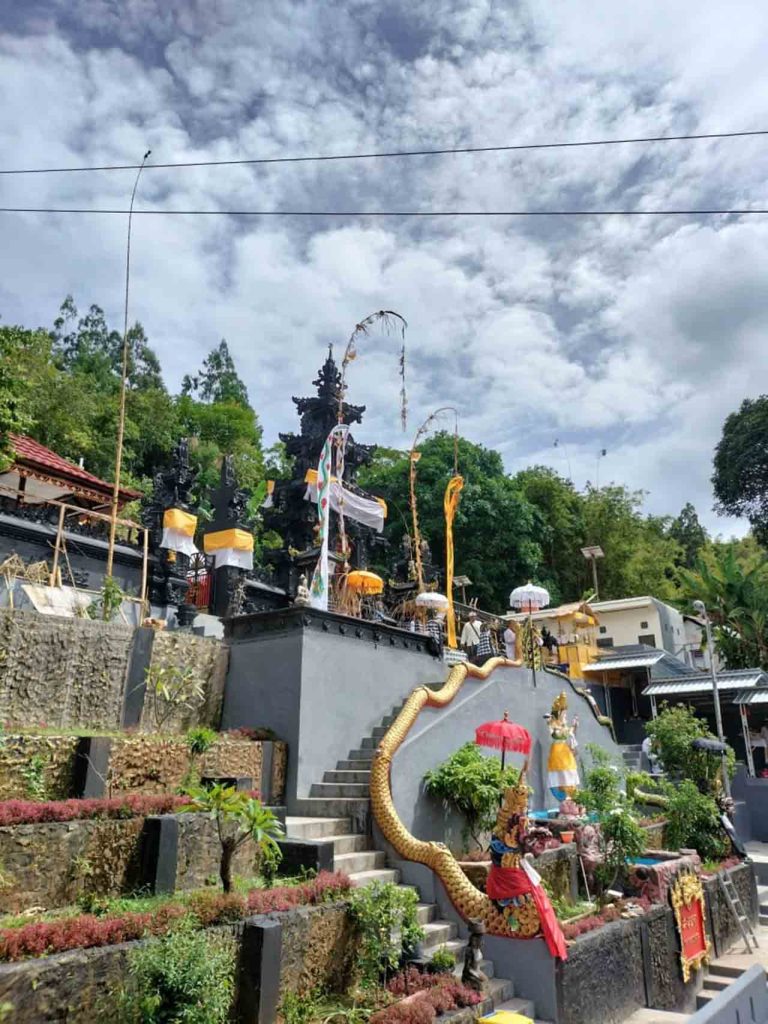

While the image of the floating temple in Bedugul often graces postcards, there is another “Lake Temple” in Bali that holds arguably higher spiritual status and a much more dramatic history.
Pura Ulun Danu Batur, located in Kintamani, Bangli, is the second most important temple in Bali after the Mother Temple (Besakih). Dedicated to Dewi Danu, the Goddess of the Lake and Rivers, this temple is not just a place of worship; it is the spiritual control center of Bali’s water management system (Subak) and a testament to the resilience of the Balinese people.
Here is an in-depth guide to the history, significance, and unique allure of Pura Batur.
- The Dramatic History: A Temple That Moved
Unlike most ancient temples that have stood in the same spot for centuries, Pura Ulun Danu Batur is relatively “new” in its current location—but its roots are ancient.
Originally, the temple was located down in the caldera, at the foot of Mount Batur, right beside the lake. It stood there since the 17th century. However, Mount Batur is an active volcano.
1917: A violent eruption destroyed thousands of homes and lives, yet the lava flow miraculously stopped at the temple gates. The locals took this as a good omen and decided to stay.
1926: The volcano erupted again, this time burying the entire temple complex under thick layers of black lava.
Despite the destruction in 1926, the villagers managed to save the most sacred shrine—the 11-tiered Meru dedicated to Dewi Danu. With heavy hearts but unbroken spirits, the villagers of Batur relocated to the upper rim of the caldera (the current location in Kalanganyar).
They rebuilt the temple stone by stone, creating the magnificent complex we see today, which now looks down safely at the volcano that once destroyed it.
- Spiritual Significance: The Source of Life
Pura Ulun Danu Batur is one of the Sad Kahyangan Jagat (the Six Sanctuaries of the World). Its primary function is to maintain harmony in the northern direction of the island.
The temple honors Ida Batara Dewi Ulun Danu. In Balinese belief, Lake Batur is the primary source of fresh water for the island. The water flows underground and emerges as springs in lower areas (like Gianyar and Badung).
Therefore, farmers from all over central and southern Bali come here to pay homage. If the Goddess is pleased, the water flows, and the rice harvests are bountiful.
Because of its role as the “headquarters” of the water distribution deity, Pura Batur is a critical component of the Cultural Landscape of Bali Province, a UNESCO World Heritage site. It represents the Tri Hita Karana philosophy—specifically the relationship between humans and nature (water).
- Unique Architecture and Shrines
The complex is vast, comprising nine different temples and nearly 300 shrines.
The 11-Tiered Meru: The towering, black thatch-roofed structure is the most sacred point, dedicated to the Goddess.
Pura Penataran Agung Batur: The main zone of the complex.
The Chinese Shrine (Konco): One of the most unique aspects of Pura Batur is a shrine dedicated to Ratu Gede Pancering Jagat (often associated with Chinese trade and prosperity).
It is decorated in vibrant red and gold, distinct from the traditional Balinese style. This reflects the ancient trade history between Bali and China and the assimilation of Chinese culture in the Kintamani area.
- Ceremonies and Festivals
The temple is rarely quiet, but certain times of the year offer a spectacular display of devotion.
Ngusaba Kadasa: This is the grandest festival, usually held around late March or early April (the 10th full moon of the Balinese calendar). During this time, the temple is adorned with colorful fabrics, towering penjor (bamboo poles), and offerings of fruit and flowers. Thousands of pilgrims from across Bali flock here to pray.
Mapag Toya: A ritual specifically related to agriculture, where farmers request holy water to bless their fields and ensure a good harvest.
- Visitor Guide: Tips for Exploring
Location:
The temple is located in Batur Village, Kintamani, about 900 meters above sea level. It is roughly a 1.5 to 2-hour drive from Ubud.
Best Time to Visit:
Morning (09:00 – 11:00): Kintamani is notorious for afternoon fog. Arrive early to get a clear view of the temple architecture against the backdrop of the blue sky, and to enjoy the view of Mount Batur from the nearby viewpoints.
Dress Code:
As with all temples in Bali, you must wear a sarong and sash. Your shoulders should be covered. If you don’t have a sarong, rentals are usually available at the entrance.
Photography Tip:
The intricate Candi Bentar (split gate) makes for a stunning frame. Capture the contrast between the black volcanic stone of the temple and the colorful sashes of the devotees.
Pura Ulun Danu Batur is more than just a tourist stop; it is a symbol of Bali’s ability to rebuild and find harmony with nature’s most destructive forces. Whether you are interested in the engineering marvel of the Subak system, the history of volcanic survival, or simply the serene vibration of a high-altitude sanctuary, this temple in Bangli offers a profound glimpse into the heart of Balinese spirituality. (BT)